


 mariusmoza
In-Clinic Feline Diagnostics: Cobalamin, Folate & Thyroid Testing
Based on clinical insights from Dr. Gary Oswald’s webinar, If Cats Were in Charge: Feline In-Clinic Tests They Would Want You to Know About *
In-clinic feline diagnostics have changed what’s possible in a single appointment. A cat comes in with weight loss, chronic soft stools, and a dull coat — the signs could point to a dozen different conditions. Previously, the visit often ended the same way: draw blood, send it out, wait two to three days, then call the client with a plan. For cats who deteriorate quickly, that gap matters. Running cobalamin, folate, and thyroid panels at the point of care means the diagnostic question and the diagnostic answer can live in the same appointment — with results in hand before the cat leaves the building.
Why Cobalamin Testing Belongs in Your Feline Workup
Cobalamin — more commonly known as vitamin B12 — is a required co-factor in the citric acid cycle, plays an essential role in methionine synthase pathways for protein synthesis, and supports antioxidant function. Unlike dogs or humans, cats cannot synthesize cobalamin endogenously and are entirely dependent on dietary intake. They also have extremely limited hepatic storage capacity, with a half-life of less than two weeks. This means that when a cat’s intake or absorption is compromised, cobalamin deficiency can develop rapidly — and the consequences can be significant. For a thorough review of cobalamin’s role in small animal health, see Cobalamin in Veterinary Health and Disease in Today’s Veterinary Practice.
Deficiency most commonly presents in cats with chronic intestinal disease, where the complex absorption pathway for cobalamin breaks down. Cobalamin is released from dietary protein in the stomach, bound to haptocorrin (the R protein) for transit through the acidic gastric environment, then transferred to intrinsic factor — primarily produced by the feline pancreas — in the small intestine. Intrinsic factor carries cobalamin to cubilin receptors on ileal enterocytes for absorption into the bloodstream. Any disruption along this pathway can result in deficiency.
Clinical Presentations Associated with Cobalamin Deficiency
The most common presentation is chronic small intestinal disease — including inflammatory bowel disease, intestinal lymphoma, food-responsive enteropathy, dysbiosis, and exocrine pancreatic insufficiency (EPI). Clinical signs mirror any chronic gastrointestinal disorder: weight loss, poor body condition, reduced appetite, soft stools or diarrhea, and intermittent vomiting. In younger cats, cobalamin deficiency may manifest as failure to thrive. In some cases, inadequate cobalamin impairs ammonia processing, resulting in central neuropathies that may resemble hepatic encephalopathy — making it worth considering cobalamin status in cats where a portosystemic shunt is suspected but cannot be confirmed.
Once a cat becomes cobalamin deficient, the deficiency itself tends to accelerate intestinal disease progression — a compounding cycle that makes early identification and supplementation both a diagnostic and therapeutic priority.
Interpreting Cobalamin Results and Supplementation Protocols
Cobalamin testing requires a fasted serum sample (8–12 hours) to avoid falsely elevated results. The reference interval is >290 ng/L. Cats below 400 ng/L — even within the technical reference range — are at risk and should be considered candidates for supplementation. Below 290 ng/L indicates true deficiency; below 150 ng/L indicates tissue-level depletion with active clinical signs almost certainly present.
Supplementation can be delivered via subcutaneous injection or orally. For injectable protocols, cats under 5 kg receive 250 mcg and cats over 5 kg receive 400 mcg, given weekly for six weeks with a recheck at week 14. Oral supplementation runs at 250 mcg daily for 12 continuous weeks, with reassessment at week 16. In both cases, the target at recheck is a supratherapeutic blood level confirming adequate resp supplementation onse. If underlying disease is ongoing — lymphoma, IBD, EPI — maintenance is typically continued long-term. There is no meaningful risk of over-supplementation; excess cobalamin is excreted.
Folate as a Biomarker for Intestinal Localization
Folate (vitamin B9) rarely produces systemic illness in felines on its own, and cats can obtain it from a broad range of dietary sources as well as from intestinal microbiota synthesis. Its real diagnostic value is as a biomarker — specifically, a spatial indicator of where intestinal dysfunction is occurring. The normal reference range for feline folate is 9.7–21.6 mcg/L, and deviations in either direction carry distinct clinical meaning.
Elevated folate above 21.6 mcg/L is not clinically harmful, but it reliably signals dysbiosis. When bacteria in the intestinal microbiome produce excessive folate, serum levels rise — pointing to a disrupted microbiome that warrants dietary evaluation, probiotic or prebiotic therapy, and in persistent cases, fecal microbial transplant. Low folate below 9.7 mcg/L tells a different story entirely. Because folate is only absorbed in the duodenum and proximal jejunum, hypofolatemia specifically implicates upper small intestinal disease — and is a direct prompt to image the upper GI tract, run a feline pancreatic lipase assay, and determine whether the workup should proceed toward biopsy or immunosuppressive therapy.
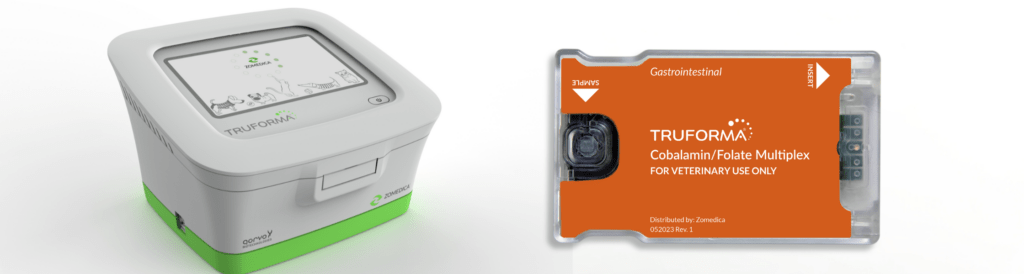
As the Merck Veterinary Manual notes, folate is absorbed primarily by the proximal small intestine while cobalamin is absorbed distally — making the two tests a practical spatial diagnostic tool when run together. Zomedica recently expanded the TRUFORMA® in-clinic biosensor testing platform to include feline use for this multiplexed cobalamin and folate assay, previously available for canine patients only, delivering both results in under 25 minutes.
Feline Hyperthyroidism: Choosing the Right Thyroid Tests
Feline hyperthyroidism is the most common endocrine disorder in older cats, and total T4 remains the standard first-line screening test. A T4 above 3.82 mcg/dL in a cat with appropriate clinical signs — weight loss, poor body condition, PUPD, panting, hyperactivity, vomiting — is highly consistent with hyperthyroidism, with sensitivity around 91% and specificity above 99%. For straightforward presentations, a single elevated T4 in the right clinical context is diagnostically sufficient.
But a meaningful subset of cases are not straightforward. Cats with concurrent illness — IBD, chronic kidney disease, cardiac disease — can have T4 values suppressed into the normal range despite active hyperthyroidism. Early or subclinical cases fluctuate in and out of the reference range. Cats with palpable thyroid nodules may present with a normal T4 entirely. The 2016 AAFP Guidelines for the Management of Feline Hyperthyroidism organize these challenging cases into distinct diagnostic categories — each requiring a different approach — underscoring why a second, confirmatory test is often essential.
Why Total T4 + Feline-Optimized TSH Is the Right Combination
In hyperthyroidism, autonomous T4 production suppresses TSH through negative feedback — and this suppression occurs early, often before T4 has risen significantly above the reference range. A sensitive TSH assay that detects pituitary suppression can therefore serve as a confirmatory test even in cats with borderline T4 values.
Free T4 by equilibrium dialysis has been proposed as an alternative, but its specificity drops to approximately 85% — meaning up to 15% of cats without hyperthyroidism will test high. A high free T4 alone cannot confirm disease. For these reasons, free T4 is not a reliable standalone confirmatory test, and combining it with total T4 still leaves a meaningful diagnostic gap.
The Assay Sensitivity Problem — and How Feline-Optimized TSH Solves It
The traditional canine TSH assay used at reference laboratories has a lower limit of detection of 0.03 ng/mL. But the normal TSH range in cats extends down to 0.01 ng/mL — meaning many confirmed hyperthyroid cats fall below the canine assay’s detection threshold and are indistinguishable from cats with low-normal TSH due to non-thyroidal illness. The resulting performance numbers reflect this limitation: the canine chemiluminescent assay achieves only 79% sensitivity, 76% specificity, and a 21% positive predictive value for feline hyperthyroidism. That is not adequate for clinical confirmation.
The TRUFORMA in-clinic biosensor testing platform uses bulk acoustic wave (BAW) technology to run a feline-optimized TSH assay with a lower limit of detection of 0.008 ng/mL — well below the threshold where feline hyperthyroid cats become undetectable on the canine assay. Independent validation data show 90% sensitivity, 98% specificity, and a positive predictive value of approximately 87%. A cat with a TSH below 0.01 ng/mL has strong evidence of hyperthyroidism; a cat above 0.01 ng/mL is more likely euthyroid or suffering from a non-thyroidal illness. Running T4 and feline-optimized TSH together takes less than 40 minutes in-clinic and delivers a clear, evidence-based path forward. As Today’s Veterinary Business notes, the TRUFORMA platform was specifically developed to provide reference laboratory accuracy at the point of care using BAW technology — the same approach used in telecommunications and aerospace for decades.
Using TSH to Monitor Post-Treatment Thyroid Status
TSH testing is not only valuable at diagnosis — it plays an equally important role in monitoring cats following radioiodine (I-131) therapy or methimazole treatment. Up to 50% of cats treated with radioiodine experience transient iatrogenic hypothyroidism in the first 30 to 60 days. The clinical signs — weight gain, reduced activity, normal appetite — are easily confused with successful treatment response, making laboratory monitoring essential rather than optional. Cornell University’s Feline Health Center notes that radioiodine is curative in approximately 95% of hyperthyroid cases, which makes preserving renal function post-treatment a primary long-term concern.
Recommended post-treatment monitoring includes T4, TSH, and a renal panel at days 30, 60, 90, and 180. Successful treatment looks like T4 in the normal range (above 1.5 mcg/dL), TSH returning to a detectable level as the hypothalamic-pituitary-thyroid axis recovers, and stable creatinine. Cats with persistently low T4 and elevated TSH above 0.15 ng/mL at the 6-month mark should be started on levothyroxine. Any cat showing rising creatinine or SDMA in the context of low T4 and elevated TSH should be supplemented earlier — protecting GFR is the priority.
The Case for Point-of-Care Testing in Feline Medicine
Send-out laboratory testing is reliable — but it introduces delays that shift decision-making out of the appointment and into a follow-up phone call. The visit ends without direction and treatment starts a day later than it could have. For cats who deteriorate quickly, especially those with active cobalamin deficiency and concurrent intestinal disease, that gap has clinical consequences.
Every day a result is delayed is a day treatment doesn’t start. Point-of-care testing eliminates that gap entirely. Cobalamin supplementation can be initiated before the cat leaves the building. A low folate result prompts an immediate conversation about upper GI imaging while the client is still in the room. A suppressed TSH alongside an elevated T4 opens the door to a same-visit discussion of methimazole versus radioiodine referral. That kind of real-time clinical reasoning is better for patients, more satisfying for clients, and more efficient for the practice.
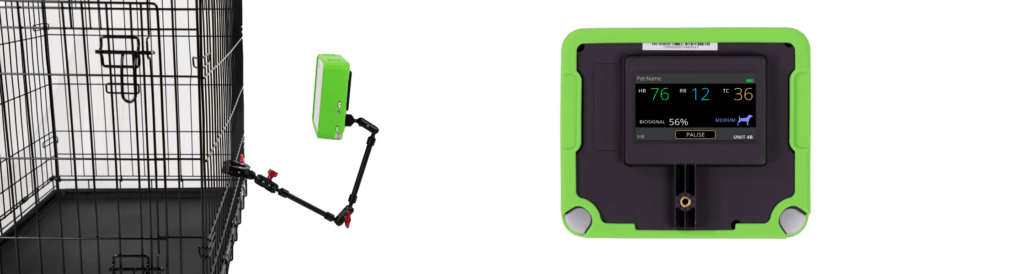
The TRUFORMA in-clinic biosensor testing platform runs quantitative immunoassays using bulk acoustic wave technology — a non-optical, fluorescence-free detection method that is less susceptible to the interference risks associated with chemiluminescent or enzyme-linked assays. Hemolysis and lipemia, which can affect send-out sample integrity, are thought to have less impact on BAW-based results. The platform currently supports feline cobalamin, folate, total T4, and feline-optimized TSH, plus additional assays for canine diagnostic testing. More than 18 veterinary universities currently use the platform.
Conclusion
Feline medicine demands diagnostic tools that match how cats present: subtly, quickly, and often with multiple conditions in play. The ability to run cobalamin, folate, and a feline-optimized thyroid panel in-clinic — and have results before the appointment ends — is not just a workflow improvement. It is a clinical edge. The feline-optimized TSH assay in particular addresses a gap that has frustrated practitioners for years, providing a confirmatory result for hyperthyroidism that the canine assay could not reliably deliver. For any practice seeing a meaningful volume of feline patients, in-clinic access to these tests is one of the higher-impact diagnostic upgrades available today.
Ready to learn more? Explore TRUFORMA® assays and see how point-of-care biosensor testing can support your feline patients. Visit zomedica.com to learn more about the TRUFORMA in-clinic biosensor testing platform.
©2026 Zomedica Inc. All rights reserved. TRUFORMA is a registered trademark of Zomedica Inc.
*Dr. Oswald is a paid consultant for Zomedica, Inc.
Disclaimer: The information provided on this blog is for general informational and educational purposes only. It is not intended as medical advice and should not be used as a substitute for professional medical guidance. Always consult a qualified healthcare provider before making any health‑related decisions.

 brian